Movement One — The Kalymnos Table
The Anclote River had witnessed centuries of change.
Dugout canoes once traveled its waters. Schooners carried goods to and from the growing community. Fishing boats worked the river and the Gulf. Sponge fleets grew along its banks. Shrimp trawlers crowded its docks. Crabbing and other commercial fishing continued alongside a changing waterfront.
Some boats remained. Others disappeared.
The work changed. The river remained.
On Monday morning, at The Kalymnos Table, known to the family simply as “The Table,” Kosta Vasilakis was planning the restaurant’s menu for the coming week.
Monday was different at The Table. The doors would close at two o’clock, and Yannis and Joanna, his senior waitstaff, were responsible for coordinating the day’s service.
They had worked together long enough to know what needed doing without Kosta looking over their shoulders.
It gave him something he seldom had during the rest of the week.
Time.
Family time.
Kosta had grown up around the Sponge Docks. His father, Argus “Gus,” was a third-generation Tarpon Springs sponge diver who had spent much of his working life aboard the Aegean Sounding.
Rather than follow his father onto the sponge boats, Kosta had chosen to run the family’s restaurant.
Both men had made their living along the same waterfront, in different ways.
Gus often stopped at The Table in the morning for coffee and a light breakfast. Sometimes Kosta’s nineteen-year-old son, Alexi, joined them.
This Monday, all three were together. Kosta’s wife, Sarah, was away visiting family.
Alexi was helping his father review the planned menu.
“We haven’t had Gulf shrimp on the Monday specials for a while,” Kosta said.
Alexi looked up.
“Shrimp. That reminds me of something.”
He took out his phone.
“I found an old photograph online. Look at this.”
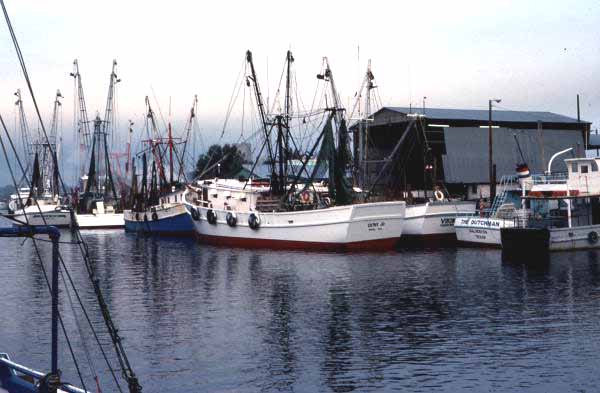
He showed them a picture of shrimp boats crowded along the north side of the waterfront, some tied two and three deep.
“There must have been dozens of them.”
Kosta studied the photograph.
“There were. Hard to imagine that many shrimp boats tied up there now.”
Alexi turned toward his grandfather.
“Papou, what happened to all those shrimp boats?”
Gus remembered a waterfront Alexi had never known.
For a moment, he said nothing.
Then he looked at his grandson.
“Depends on who you ask.”
Movement Two — The Fleet That Was Here
Alexi considered his grandfather’s answer.
“Who should I ask?”
“Start with Niko,” Kosta said. “The harbormaster. He’s watched boats come and go for years.”
“Think he’ll know?”
Gus nodded.
“He’ll know something.”
Alexi left The Table and walked east along Dodecanese Boulevard toward the city marina and the visitor center.
He stopped inside the visitor center first. He found Stella.
“Hi, Stella. Is Niko around?”
“Is his four-by-four ATV outside?”
“Yeah.”
“Then he’s around somewhere. Probably down at the marina.”
Stella could tell Alexi had something on his mind.
“What do you need him for?”
Alexi showed her the photograph.
“I’m trying to find out what happened to these shrimp boats.”
Stella looked at the picture.
“I’ve seen that picture before. It gets around.”
“Do you know why they left?”
“I couldn’t tell you that. But Niko might remember something.”
“That’s what Dad thought.”
Stella handed back his phone.
“That’s a good question, Alexi. Let me know what he says.”
“I will. Thanks, Stella.”
Alexi stepped outside the Visitors Center and headed toward the municipal marina to find Niko.
As he walked, he looked across the turning basin, a broad stretch of water between the municipal marina and the private marina across the river, just west of the Alt-19 bridge. Boats coming and going from the docks used the open water to turn and maneuver. Alexi had watched them do it many times.
Movement Three — The Harbormaster and the Basin
Alexi found Niko checking the dock lines at a slip, preparing for the arrival of a visiting boat.
“Hi, Niko. Got a minute?”
Niko looked up.
“I’m pretty busy, but I’ve got a few. How’s your grandfather?”
“Good. I was just having breakfast with him and Dad.”
“Glad they’re doing well. What’s on your mind?”
Alexi showed him the photograph.
“I’m trying to find out what happened to the shrimp fleet.”
Niko nodded.
“Oh, yeah. I remember those boats downriver. They were a big part of the economy around here.”
He looked toward the opposite bank.
“A lot of businesses appreciated that. Sorry to see them gone.”
“Do you know why the boats left?”
“I couldn’t tell you exactly. But those were big boats. They needed enough water beneath them and room to maneuver.”
Niko looked toward the turning basin.
“Sediment builds up in a basin like this. Over time, you lose depth.”
“Was that a problem for the shrimp trawlers?”
“Could have been. But I don’t know how much it had to do with the boats leaving.”
“Didn’t they dredge the basin?”
“Yes, but that was recent, long after those shrimp boats were gone. I can’t tell you what conditions were like when the owners made their decisions.”
Alexi looked across the basin, trying to imagine the large shrimp trawlers maneuvering there.
“Who else could I ask?”
Niko pointed west.
“Try the fellows at Heritage Point. Your grandfather sits with them sometimes.”
Alexi thanked him.
Before heading west along Dodecanese Boulevard, he stopped back at the visitor center.
Stella looked up.
“Well, did you find Niko?”
“Yeah. He remembered the shrimp boats. He also talked about sediment building up in the turning basin.”
“Oh, I remember how shallow it used to get out there before they dredged.”
She pointed through the window toward the basin.
“Right out there. I saw pleasure boats stuck in the mud. They had to wait for the tide to come in before they could get free.”
“Pleasure boats?”
“Yes. Not shrimp boats. But I saw it happen.”
Alexi thanked her and headed west along Dodecanese Boulevard.
At Heritage Point, several men were gathered near the St. Nicholas plaque and two heritage boats. One demonstrated traditional diving with a helmet and suit. The other was a modern working sponge boat.
Alexi knew the men. He approached, greeted them, and waited for a pause in their conversation.
“Good morning, gentlemen. Mind if I ask you something?”
“Morning, Alexi. What’s on your mind?”
He showed them the photograph.
“Do you remember these shrimp boats?”
One man nodded.
“Sure do.”
“Niko suggested I ask you. He said those big shrimp boats could have had trouble turning in the basin.”
“Well, before they dredged it a few years ago, there were places with only two feet of water, now it’s twelve,” one man said.
Another nodded.
“The river’s always moving. Sand and sediment don’t stay put. Niko has a point.”
One of the other men shook his head.
“Maybe so. But fuel was the real problem. Got too expensive to keep those boats running.”
“You think that was the main reason?” Alexi asked.
“That’s what I remember.”
Alexi thanked them.
As he walked away, Alexi wondered whether he had been asking the wrong question about the shrimp fleet.
Perhaps the boats hadn’t all left at once.
Perhaps there was more than one reason.
Movement Four — What People Remember
On his next opportunity away from The Table, Alexi returned to the Sponge Docks.
Men were tending lines, checking equipment, and preparing boats for work. Others sat aboard, talking or watching the activity along the waterfront. Some took time to answer questions from visitors who stopped to talk.
Other tourists strolled along Dodecanese Boulevard, stopping to photograph the boats while the waterfront’s daily work continued around them.
Natural sponges hung from cords or lay across unattended boats.
Alexi found Captain Samuel nearby.
“Can I ask you something about the old shrimp fleet that used to dock right across the Anclote from here?”
“Sure, Alexi.”
“I’ve been trying to find out why those boats left. Do you remember?”
Samuel considered the question.
“9/11,” he said. “The U.S. economy took a big hit. We did too.”
Alexi listened.
He knew about 9/11 from school, but he’d never considered how something that happened before he was born might have affected businesses along the Anclote.
He thanked Samuel and continued along the docks.
Another workman spoke about the cost of operating commercial boats.
“Big boats like those needed a lot of maintenance. Engines had to be serviced. Equipment wore out. Repairs could keep a boat tied up when it should’ve been fishing.”
Some trips, the man explained, brought back catches that barely covered the expenses.
Alexi looked toward the boats.
A vessel could be capable of catching shrimp and still be difficult to operate profitably.
That was different from not having enough water beneath its hull.
Across Dodecanese Boulevard, visitors moved between shops that sold sponges, soaps, gifts, and souvenirs.
Alexi crossed the street and found Cecilia working inside a sponge shop.
“Hi, Cecilia. Can I ask you something?”
“Of course, Alexi.”
“Our families have been here a long time. I thought you might be able to help me figure out what happened to the shrimp boats.”
“Oh, I remember those boats,” Cecilia said.
“Imported shrimp. Shrimp coming into the country could be sold for less. That made it harder for local shrimpers to compete.”
“So, buyers could get shrimp cheaper from somewhere else?”
“That’s right.”
Alexi thought about the Gulf shrimp Kosta made a point of purchasing for The Table.
Not every restaurant or seafood buyer made the same choice.
If imported shrimp cost less, how could local shrimpers compete while covering the cost of catching theirs?
Later on this walk, Alexi met a restaurant worker he knew on the sidewalk who remembered another explanation.
“The Deepwater Horizon disaster in 2010,” the man said. “It affected us all the way down here. Some of the shrimp boat owners filed claims. But they never came back.”
Alexi was surprised.
“Claims?”
“That’s what I remember. Some of the owners filed claims after the oil spill.”
Alexi wondered which owners the man meant, what the claims had been for, and whether the boats had already stopped working out of Tarpon Springs.
He thanked his friend and made a note to investigate.
Alexi still wanted to know something more specific.
What had happened to the boats themselves?
Movement Five — Back at The Table
Later that week, Alexi arrived early at The Table.
Kosta was preparing the dining area. Gus sat at his usual table with coffee and a light breakfast.
“Morning, Alexi,” Gus said. “You’ve been busy down at the docks.”
Alexi sat across from him.
“I’ve been talking to people. Everybody remembers something different.”
He told his grandfather about the conversations.
Gus listened.
“I thought somebody would just tell me what happened,” Alexi said.
“Those boats belonged to different owners,” Gus replied. “Don’t expect them all to have the same story.”
Kosta joined them.
“Have you talked to Frank Mercer at West End Seafood?”
“No.”
“Frank used to be in the shrimp business himself. He might be able to tell you what happened to some of those boats.”
“I’ve known Frank for years. Tell him I said hello.” Gus nodded.
Alexi stood.
“Think he’ll have time?”
“Go before he opens for customers,” Gus said. “He might have a few minutes then. But don’t interrupt him if he’s busy working.”
Alexi smiled.
“I know, Papou.”
He gathered his notes and headed west along Dodecanese Boulevard, toward Circle Park.
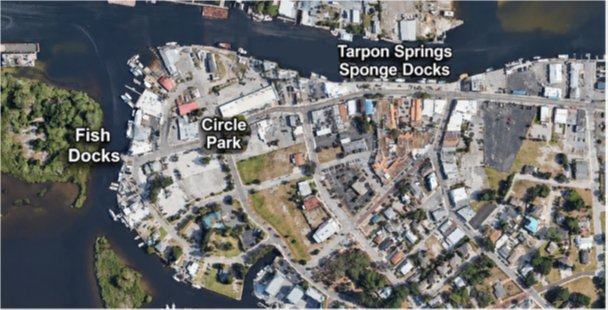
There, in the center, were four bronze figures surrounding a small fountain. Three reached toward the sky, while the fourth sat quietly on a stone wall.
Beyond the park was another working waterfront. Commercial fishing boats lined the docks. Seafood markets stood near the shore, with other businesses operating throughout the area. He had passed through there countless times without giving much thought to how it all worked.
But this time, he was looking for the people behind the boats.
Movement Six — Beyond Circle Park
Alexi stopped outside West End Seafood Market.
The front door was still locked, but he could see Frank Mercer working behind the counter.
Frank noticed him, came over, and unlocked the door.
“Morning, Alexi. Come on in.”
“Morning, Frank. Hope you’re not too busy.”
“Not too busy. How’s your grandfather?”
“Good. He told me to say hello.”
“Tell him I said the same.”
Alexi took out his phone.
“I want to show you something,” Alexi said.
He brought up the photograph.
Frank glanced at it.
“Now there’s something I haven’t seen in a long time,” he said.
“I’m trying to find out what happened to these shrimp boats,” Alexi said.
“That’s quite a question.”
“Everyone I’ve talked to at the Sponge Docks remembers them, but I keep getting different explanations.”
Alexi looked around the market.
“Dad told me you were involved in the shrimp business.”
“I was,” Frank said. “Worked with a few other boat owners. We had a small operation.”
“What happened to your boats?”
“We watched that waterfront change over the years,” Frank said. “But I can only tell you what happened with our operation.”
“Someone wanted to buy our waterfront property,” Frank said. “We talked it over and decided to sell. After that, we sold the boats.”
Alexi considered that.
“So, you didn’t leave because of shallow water or fuel prices?”
“No. We had an opportunity to sell the property, and we took it.”
“What about the Leonard and Sons fleet? Do you remember those boats?”
“Sure, I remember them.”
“Do you know what happened to them?”
“I can tell you what happened to our operation,” Frank said. “I can’t tell you what happened with all the others.”
Alexi looked at the photograph again.
He had been treating the shrimp fleet as though it were one business.
It wasn’t.
“I guess I need to find out what happened to the boats separately.”
“That’s one way to approach it,” Frank said. “A boat has an owner. An owner has a business. And a business has decisions to make.”
Frank returned to his work.
Alexi watched him prepare seafood for the day’s customers.
“Can I ask something else?”
“Go ahead.”
“Does seafood always come straight from a local boat to a restaurant?”
Frank shook his head.
“Not necessarily. A restaurant might buy from a dealer or supplier. That supplier might handle seafood from different places.”
“So, the shrimp we serve at The Table might not have come from boats working out of Tarpon Springs?”
“You’d have to check where that particular shrimp came from.”
Alexi thought about how often he had helped serve seafood without considering the route it took to reach the kitchen.
“Different boats, different owners,” Frank said. “You can’t lump them all together.”
Alexi smiled.
He thanked Frank and stepped outside.
He wanted to know when the other boats had left and where they had gone.
Movement Seven — Fishing for Boats
Alexi had spent several days listening to people who remembered the shrimp fleet.
Now he wanted to see what he could establish for himself.
Back at home, he opened his laptop and brought up the photograph.
The shrimp boats crowded the waterfront, some tied two and three deep. Alexi studied the photograph, looking for names or registration numbers.
Frank had been able to explain what happened to his smaller operation. But what about the larger fleet?
Alexi began using online research tools and resources, searching newspaper archives, vessel records, Florida’s Sunbiz business registration records, business histories, and historical photographs for information about the boats and the changes along the Tarpon Springs waterfront.
As the information began to accumulate, he realized he needed a way to keep track of what he found, where it came from, and what remained uncertain. He opened a spreadsheet and created the needed columns.
He wanted to know when particular boats had worked from Tarpon Springs, when they had last been there, and where they might have gone afterward.
He examined photographs closely, enlarging sections where names were painted on the hulls.
He began entering them in his spreadsheet.
Miss Johnnie, Lady Hamilton, Capt. Eddie, Carol Jean, Capt. Kevin, Miss Suzanne, Jessica, Big Mama, The Dutchman, Nancy Joy, Mary Christmas, Savage, George Georgiou, Nancy Marie
Thirteen names he could identify from photographs. One through someone’s recognition.
Some appeared in historical archives. Others were visible in waterfront photographs taken years later.
He could read their names, but that didn’t tell him who had owned them, how long they had worked from Tarpon Springs, or where they had gone.
A boat name was a beginning, but not an answer.
Alexi searched names he had encountered during the week, including Frank Mercer and the Leonard family behind Leonard and Sons.
Some searches produced possible leads. Others left him uncertain whether he had found the right business or boat.
A March 1993 newspaper article caught his attention. It described three fishing boats driven beneath the Alternate U.S. 19 bridge during the No-Name Storm, which several people he had interviewed had mentioned. One was Big Mama, the seventy-foot shrimp boat he had identified in a photograph.
Salvage crews planned to repair the damaged boat and move it to a dry dock. But the article didn’t tell him whether Big Mama ever returned to shrimping.
Then he found a newspaper article from May 1997.
It reported that about twenty shrimp boats called the Anclote River home year-round, roughly one-third of the fleet at its peak.
Alexi stopped reading.
The fleet had already become much smaller by 1997.
The article also described problems with the river’s navigation channel, which reportedly had not been dredged since 1973.
Alexi remembered what Niko and the men at Heritage Point had said about the turning basin.
The federal navigation channel and the municipal turning basin were different places. He made a note of that.
The article mentioned Leonard and Sons, too. The company had considered moving its operation to St. Augustine or the Carolinas.
Considered moving.
That wasn’t proof it had moved.
Alexi searched further and found Florida corporate records for Leonard Shrimp Producers.
A 2005 annual report listed 1058 Island Avenue as its principal business address. That address remained on the company’s filings through 2008, even as city records identified yacht-service and boat-repair activity at the property.
In 2009, the company listed a different principal business address.
Something had changed in the records associated with the waterfront property.
But they didn’t tell him what happened to the Leonard boats—or establish how Leonard Shrimp Producers related to Leonard and Sons.
He entered the dates and sources in his spreadsheet.
Another lead.
Then he found a newspaper account about a local fishing family and their shrimp boat, the Julie Ann.
The boat had been launched into the Anclote River in April 2002.
A new shrimp boat. In 2002.
He entered the date in his spreadsheet.
A search for Nancy Joy brought up a CNN television report from July 2004. Reporter John Zarrella had accompanied a shrimp boat of that name into the Gulf of Mexico. Its captain, John Delong, spoke about the difficulties facing shrimp fishermen. The report described poor catches and competition from imported shrimp.
Alexi checked the name against his photograph.
Could it be the same boat?
The report didn’t establish that. He had no registration number or ownership record connecting the two.
But the date caught his attention, 2004.
He entered the CNN report in his spreadsheet and added a question mark beside the possible connection to Tarpon Springs.
Shrimping hadn’t simply stopped.
Another search led him to a government-sponsored study of Gulf Coast fishing communities, published in 2005.
People interviewed for the Tarpon Springs section estimated that the number of active fishing vessels had declined from about one hundred to fifty over the preceding ten years.
Those figures concerned commercial fishing vessels generally, not just shrimp boats.
The study also described expensive dock rentals, lost commercial docking space, and a waterfront increasingly serving pleasure boats, yachts, recreational fishing boats, tour boats, scuba-diving operations, boat rentals, marinas, and marine-service businesses.
Alexi stopped reading for a moment. This was the waterfront he knew today. The changes described in the study weren’t just history. He could see their results all around him.
He thought about Frank’s operation. Perhaps he was beginning to understand how the waterfront had changed.
Frank and his partners had sold their waterfront property, then their boats.
Perhaps other owners had faced similar decisions.
But he couldn’t assume that.
The study also described wholesale fish houses that were still operating.
Commercial fishing hadn’t disappeared. The waterfront was changing, but people were still making their living from it.
Alexi returned to his interview notes.
He searched for information about dredging, operating costs, imported shrimp, and changes in commercial fishing.
Some of what he found resembled the explanations people had given him. But he couldn’t establish which pressures had caused particular owners to leave.
He also considered the restaurant worker’s account of the Deepwater Horizon disaster.
The oil spill had occurred in 2010, years after the shrimp fleet had already declined substantially.
He found no evidence establishing whether it had contributed to any remaining Tarpon Springs shrimp operations ending.
Hours passed.
Alexi looked over his spreadsheet.
He had names of individual boats, but few complete histories.
He still couldn’t account for every shrimp boat or determine why each owner had made the decisions he did.
For a moment, he felt no closer to finding the boats themselves than when he had started.
But his questions had changed.
He had begun by asking where the fleet had gone.
Now he wondered when individual boats had stopped working from Tarpon Springs, whether some had been sold or moved, and what had happened to the businesses and waterfront properties that supported them.
Alexi looked again at the photograph.
He had established more than he knew when he started, even if the fate of most of the boats remained unanswered.
Tomorrow was Sunday, and he had work at The Table.
Alexi closed his laptop and put his days of research aside.
Movement Eight — The Fish Docks
Early Sunday Morning
Alexi arrived at The Table before his workday began.
Gus was in his usual chair, enjoying coffee and a light breakfast. Kosta was reviewing the day’s preparations. Sarah had returned from visiting family and was helping get the restaurant ready for Sunday.
“Morning, Papou, Dad. Good morning, Mom.”
They returned his greeting as Alexi pulled out a chair beside Gus.
Sarah finished what she was doing and joined them.
“I’ve seen you spending hours researching those boats at home,” she said. “So, what did you find out?”
“At first, I thought somebody would tell me why the fleet left,” Alexi said. “But everybody remembered something different.”
“And what did you find?”
“Frank could tell me what happened to his operation. They sold their waterfront property, then their boats. But he couldn’t tell me why the other owners left.”
“And the others?” Kosta asked.
“Some remembered shallow water. Others talked about fuel prices, repairs, imported shrimp, and the economy. Those things might have affected different businesses, but I couldn’t establish which ones caused particular boats to leave.”
“What about the records?” Sarah asked.
“I found a newspaper article from 1997. It said about twenty shrimp boats were still based on the Anclote year-round. Only about a third of the fleet at its peak.”
“Only twenty?” Kosta asked.
“That’s what the article reported. So the fleet had already gotten much smaller by then.”
Alexi told them about the Leonard business records, the Julie Ann being launched in 2002, and the government-sponsored study describing a commercial fishing waterfront under pressure.
“The fleet had already gotten smaller by 1997, but the Julie Ann was launched in 2002. Then I found a CNN report about a shrimp boat named Nancy Joy working in the Gulf in 2004. I couldn’t prove it was the one in my photograph. And that government study said commercial fishing boats were still working from Tarpon Springs, even as dock space became harder to find.”
“So, what do you think happened?” Gus asked.
“I think shrimping out of Tarpon Springs was becoming too expensive to sustain. Fuel, repairs, imported shrimp, dock space. Different owners faced different problems, but in the end, they had to make business decisions.”
Alexi looked toward his grandfather.
“I think I was expecting something like the sponge blight. One thing that happened and explained why the fleet changed.”
Gus considered that.
“The blight was a hard time for the sponge boats. But every business still had its own troubles.”
“That’s what I’m finding with the shrimp boats. I don’t think shrimping out of Tarpon Springs was economically sustainable anymore. But I can’t say specifically what it was that made each owner leave.”
“Sounds like you’ve learned something,” Gus said.
“I have. I’d still like to know where those boats went. But finding out would mean tracing them one at a time.”
Sarah smiled.
“Wow, Alexi. You’ve become a regular historian.”
“Oh, no, Mom. I never liked history in school. I’ve just now come to realize how much I don’t know.”
Gus and Kosta chuckled.
“Don’t worry,” Kosta said. “There’s plenty more you don’t know.”
“Thanks, Dad.”
Gus smiled.
“But now you’re asking.”
Alexi glanced toward the windows.
“There’s something else,” he said.
Kosta looked up.
“What’s that?”
“I’ve known the Sponge Docks all my life. And I’ve known the working waterfront beyond Circle Park just as long. But I’ve never really thought of it as a place with its own identity.”
“What do you mean?” Sarah asked.
“We call this side the Sponge Docks. Why shouldn’t we call the west end the Fish Docks?”
Sarah looked at him.
“The Fish Docks?”
“Think about what’s over there.”
Alexi remembered walking beyond Circle Park to Frank’s market.
Hurricane Helene had damaged waterfront businesses in September 2024. Repairs and rebuilding followed. Fishing boats returned to work, seafood markets reopened, and the people who depended on the waterfront carried on.
Now, commercial fishing boats lined the docks. Seafood markets, restaurants, and other businesses operated along the waterfront and throughout the surrounding west end. The people working the docks weren’t waiting for tourists to arrive. They had boats to maintain and catches to handle.
Stone crab boats. Blue crab boats. Grouper boats. Longliners.
Other commercial fishing vessels worked from those docks, too.
Shrimp boats still delivered their catches to the waterfront, while bait shrimp boats continued working on the Anclote.
“People come here to see the Sponge Docks,” Alexi said. “They walk or drive along Dodecanese, reach Circle Park, and turn around. They might never see what’s farther west.”
“A lot of people work over there,” Kosta said.
“I know. That’s what I mean.”
Alexi thought of Frank behind the counter at West End Seafood Market.
Boats brought in catches. Markets handled and sold seafood. Crews needed supplies. Engines and equipment needed repairs. Restaurants depended on people who could get seafood to their kitchens.
“It’s not just the fishing boats,” Alexi said. “It’s everybody connected to them.”
Kosta nodded.
“That’s true of this place, too.”
Alexi looked toward the kitchen.
His father made a point of buying Gulf shrimp for The Table. But Alexi had learned from Frank that seafood didn’t always travel directly from a local boat to a restaurant.
Shrimp, grouper, snapper, tuna, swordfish, salmon. Some came through suppliers handling seafood from far beyond Tarpon Springs.
He had helped serve those dishes for years without giving much thought to the people and businesses behind them.
“Most customers only see what’s on the plate,” Kosta said.
Alexi smiled.
“I used to do the same thing.”
Sarah looked at him.
“So you’ve been looking for the shrimp boats, and you’ve found the Fish Docks.”
“They were already there,” Alexi said. “I just hadn’t thought about them that way.”
Gus listened quietly.
Kosta glanced toward the preparations waiting for him. Sunday customers would soon begin arriving.
Sarah returned to helping the staff. Kosta went back to the day’s work.
Gus remained at the table with Alexi.
“You still want to know where those boats went?” Gus asked.
“Yes, Papou.”
“Good.”
Gus took another sip of coffee.
Alexi looked toward the windows again.
Sunday was beginning at The Kalymnos Table. There were customers to serve and seafood to prepare. Beyond Circle Park, fishing boats, markets, and the people who depended on them were already at work.
Alexi had known that waterfront all his life.
Now he had a name for it.
The Fish Docks.