
The Rudder and the Boats
Reflections on Judgment in the Presence of Intelligent Systems
Author’s Note on the Cover Image(See PDF)
The cover illustration presents several vessels moving across open water while a lighthouse stands fixed on a rocky outcrop. The boats vary in size and design. Some rely on sails, others on engines. Each moves independently across the same sea.
The lighthouse does not move with them. Its purpose is not speed or capability. It exists to provide orientation. For generations, mariners have used landmarks like these to check their position and course.
The image invites reflection on a similar dynamic now emerging around intelligent systems: the challenge of preserving guidance as capabilities continue to evolve.
Abstract
Artificial intelligence systems are increasingly capable of producing answers that sound clear, helpful, and complete across many kinds of work. As these systems become integrated into everyday work and decision-making, attention often turns toward the tools themselves, with comparisons of models, capabilities, and performance.
Yet the growing presence of intelligent tools introduces a quieter concern. When answers arrive quickly and confidently, the moment of human judgment may receive less attention than the technology producing the response.
This essay reflects on that shift. Using the metaphor of navigation, it explores the difference between the vessels that carry us across information and the human responsibility required to steer them wisely.
The Boats
Every new generation of artificial intelligence sparks discussion about its capabilities.
Which model reasons more effectively?
Which system produces the most reliable output?
Which tool should organizations adopt?
These conversations are understandable. Intelligent systems are powerful tools. They can search, summarize, explain, and help complete work that used to take far longer.
In many ways, they resemble vessels designed for travel.
Some are small and specialized. Others are large and powerful. Some move quickly across familiar routes, while others are built to explore unfamiliar waters.
The differences between vessels matter. Design matters because it shapes what the vessel can do, what it can carry, and where it can safely go.
Yet experienced navigators know that a journey depends on more than the vessel alone.
The Ocean
Artificial intelligence systems operate within an environment that resembles an open sea of information. Data, interpretations, summaries, and recommendations flow continuously. In this environment, answers can arrive quickly and sound unusually complete.
Fluency can be persuasive. A response that appears clear and confident can feel trustworthy simply because it is well expressed.
But clarity of expression does not guarantee correctness. Confidence of tone does not ensure reliability. And the speed of response does not determine whether a direction is wise.
These distinctions become important as intelligent systems move from experimental tools into everyday decision environments.
When the waters are calm, navigation may appear simple. Yet oceans are rarely as straightforward as they first appear.
Fluency can be persuasive.
But clarity of expression does not guarantee correctness.
The Rudder
For centuries, successful navigation has depended on the skill of the person guiding the vessel.
A ship may be powerful. Its sails may be well designed. Its engines may be strong. But the direction of travel ultimately depends on the rudder, the mechanism through which human judgment guides movement.
The rudder is rarely the most visible part of a vessel. It attracts little attention compared with sails or engines. Yet without it, the ship cannot maintain direction.
The presence of intelligent systems introduces a similar dynamic.
As tools grow more capable, attention may shift toward their performance while the quieter act of judgment receives less attention. The system produces an answer. The response appears helpful. The work moves forward.
But the decision to trust, interpret, and act upon that answer still belongs to the human navigator.
The rudder has not disappeared.
It has simply become easier to overlook.
The rudder has not disappeared.
It has simply become easier to overlook.
The Lighthouse
Navigators have long relied on fixed points to help them maintain orientation. Compasses, charts, and lighthouses do not travel with the vessel. They remain stable references within a changing environment.
A lighthouse does not compete with ships. It does not attempt to move faster or farther. Its purpose is different. It exists so that navigators can recognize where they are and understand the conditions around them.
The presence of intelligent systems invites a similar need for orientation.
As tools become more capable and persuasive, individuals and organizations benefit from maintaining clear reference points for judgment. These reference points may take the form of practices, principles, or habits of reflection that help guide interpretation.
Such orientation does not reject intelligent systems. Instead, it allows their capabilities to be used with greater awareness of context and consequence.
The lighthouse reminds the navigator that the journey takes place within a larger environment.
Steering
The boats will continue to change.
New systems will appear. Capabilities will expand. Tools will become more integrated into everyday activity across education, business, research, and public life.
In many ways, this progression is natural. Human history has always included the development of tools that extend our reach and capacity.
But as the vessels improve, the responsibility for navigation remains.
The question is not simply which tool we use.
The deeper question is whether we remain attentive to the act of steering.
Regardless of the vessel, every journey still requires direction.
The tools may carry us farther, but judgment must still decide where we are going.
The tools may carry us farther,
but judgment must still decide where we are going.
Author’s Governance Note
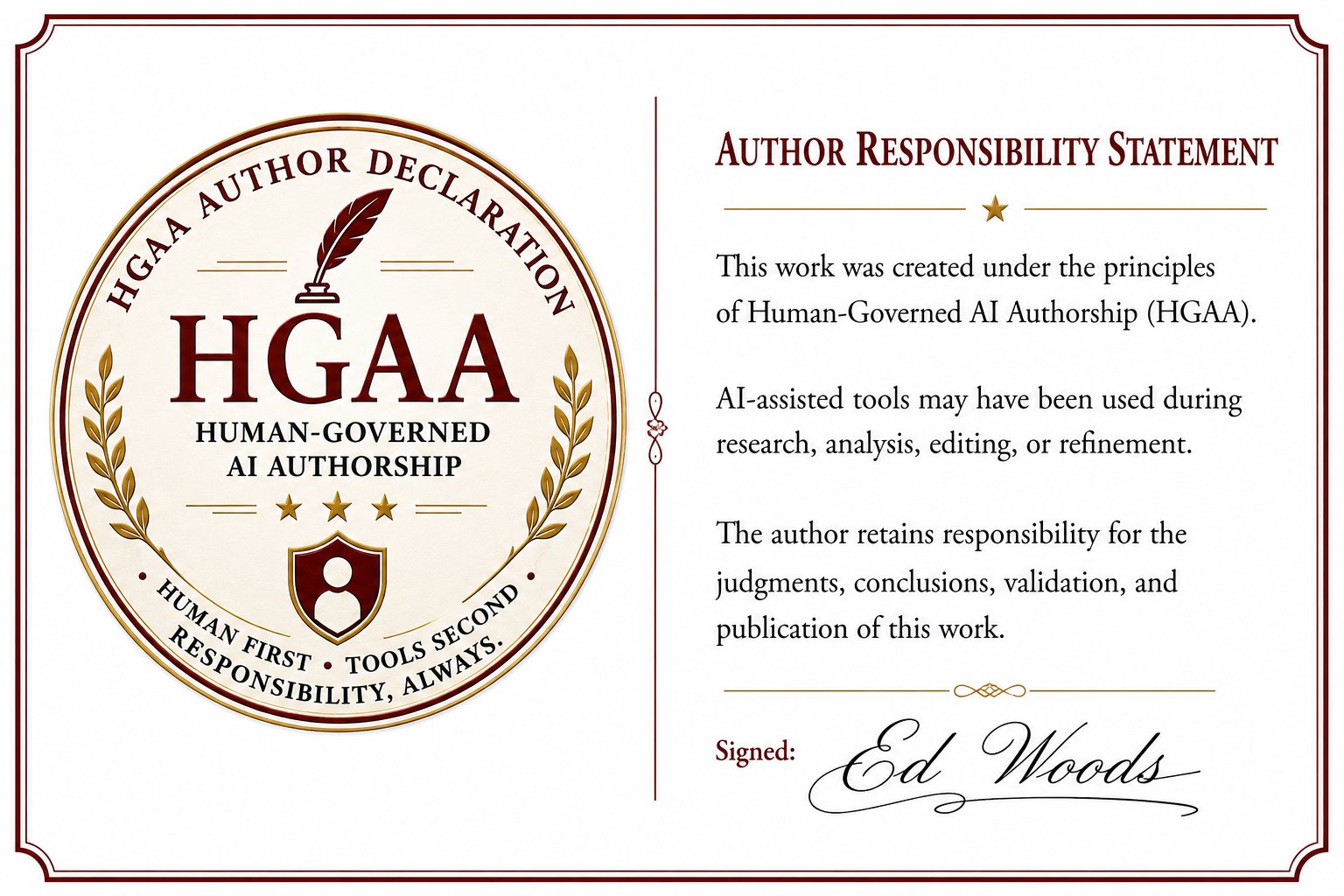
This essay was developed through AI-assisted drafting and deliberate human review, guided by the ARC Framework, the principles of Human-Governed AI Authorship, and the craft discipline described in Craft Authorship.
AI assisted with drafting, revision, and review. It did not determine authorship or make final decisions.
I am the author of this essay because I exercised judgment over what was proposed, rejected what did not belong, accepted only what reflected my intent, and take responsibility for the final work.
Governance References
Read more Measured Resonance essays at:
ReefFlowEssays.com
What do you think?
If this essay resonated with you, share it with someone who is already using AI in their work or daily life. As intelligent systems become more capable, what serves as your lighthouse?
Share on Facebook